
Work Study Measurement Method
The right work study method for each position, matched to the nature of the work.
Using collar type, shift factor and three quick classifications (cycle / repetition, continuous post, volume data), a primary and an alternative measurement method are suggested for each position, with a rationale. Blue- and white-collar work have their own methods; the work study guide in each phase explains the steps and tools.
What you gain with NORMAS
- The suggestion updates as soon as the classification changes; the selected method carries into the analysis form.
- In the analysis, other methods suited to the collar type can be added to cross-check the result.
How it works
Classify, choose the method, check the sample.
-
1
Classify the positions
Choose cycle / repetition, post and volume data; accept the suggested method or change it.
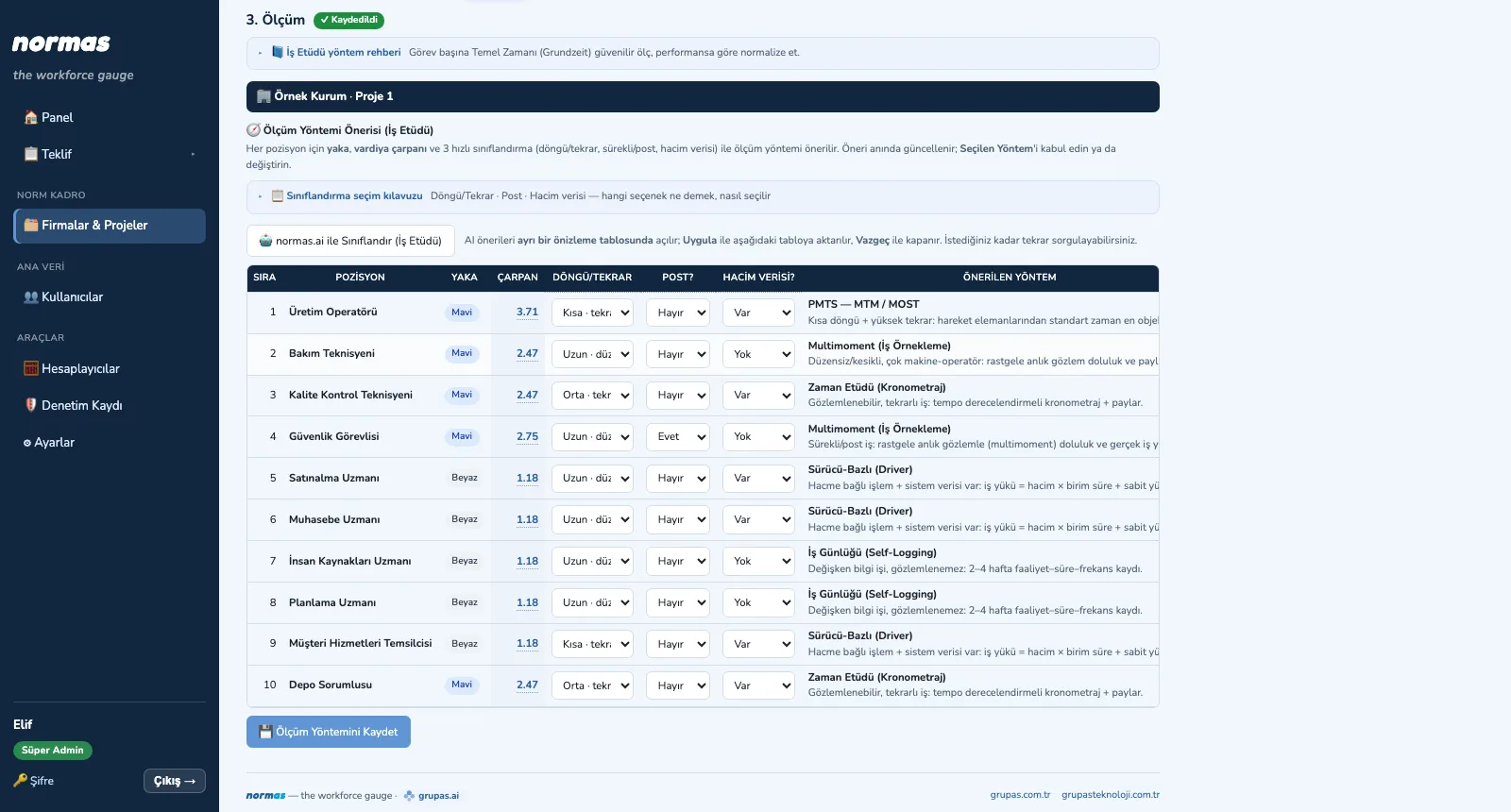
-
2
Follow the guide
The work study guide and the classification guide explain what each option means and which tool it leads to.
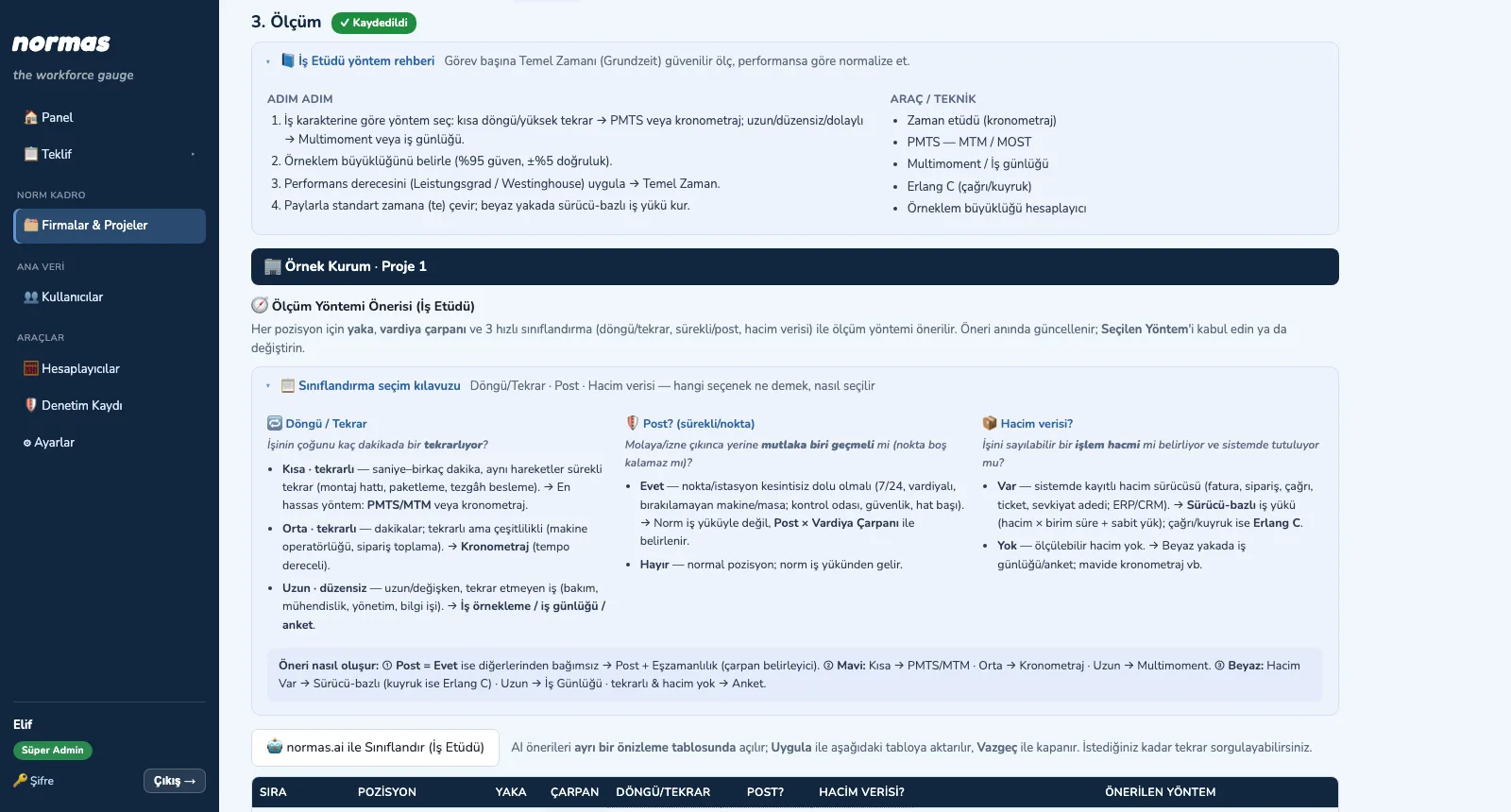
-
3
Calculate the sample
Use the calculators for required observations and cycles, Erlang C for staffing and takt for line balance.
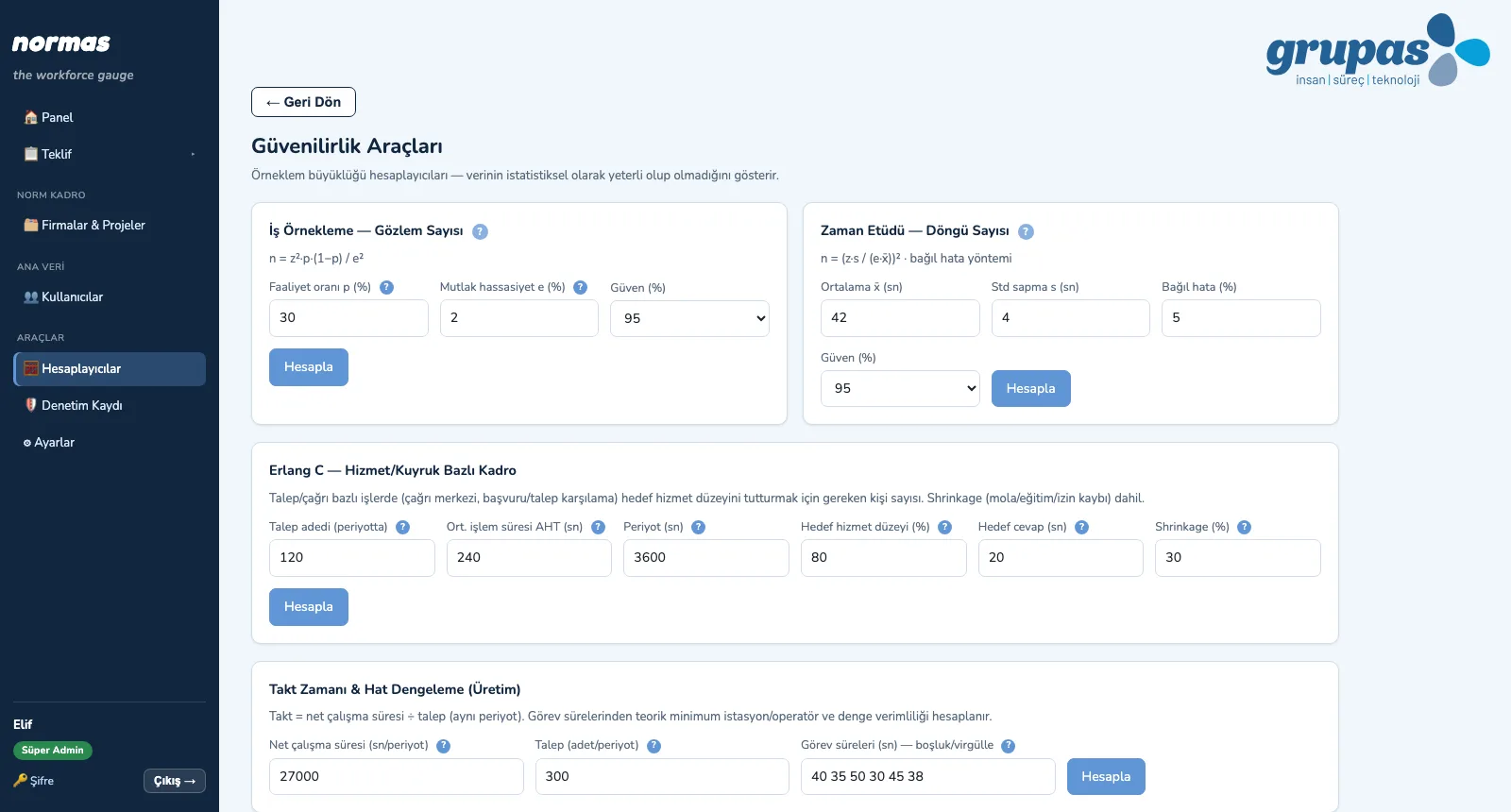
Screens are shown with sample data only; the application interface is in Turkish.
Purpose
To avoid a wrong norm from a wrong method: measure observable repetitive work and variable knowledge work with the right tool.
Features
- Blue collar: time study (stopwatch), PMTS — MTM / MOST, work sampling, takt and line balancing
- White collar: work log, survey (self-reported), driver-based (volume × unit time), Erlang C
- Post × shift factor for continuous / fixed-point duties
- Classification guide and AI classification suggestion
- Calculators: observations for work sampling, cycles for time study, Erlang C, takt and line balancing
Benefits
- Method choice is justified and traceable
- Sample adequacy is checked by calculation
- The method guide is at hand in every phase
Who uses it
Work study specialists, industrial engineers, consultants and analysts.
All features
Base your staffing decision on measurement with NORMAS
Write to us for a live walkthrough on sample data.
Request a demo