
The right headcount,
decisions based on measurement
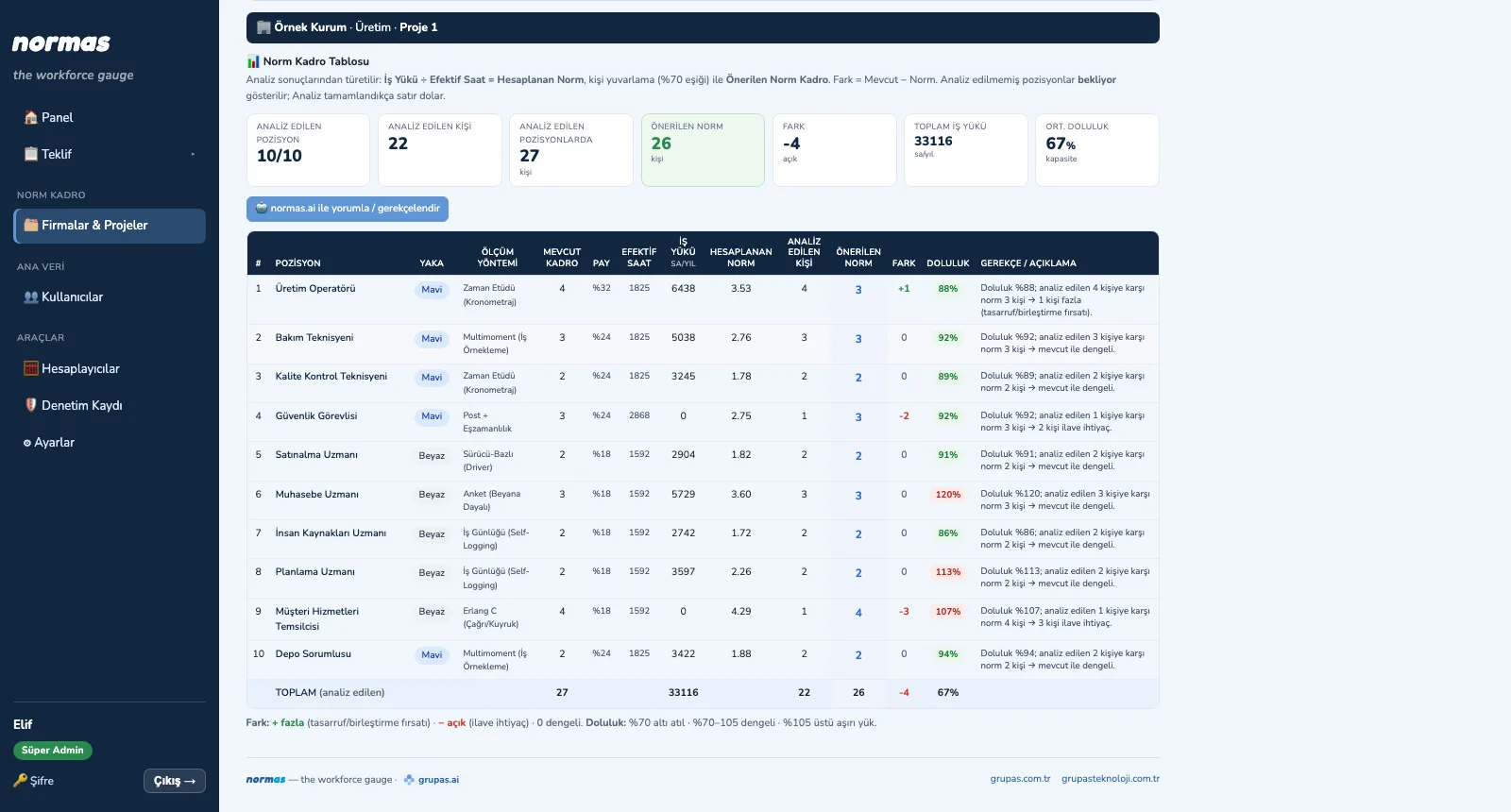
NORMAS measures an organization's work: it suggests the work study method that suits each position, calculates real capacity with the working calendar and shift factor, analyzes workload person by person and compares the norm with current headcount. Declarations above capacity are verified with a Second and Third Analysis.
Staffing decisions often rest on guesswork, not measurement
NORMAS calculates staffing needs from workload measured with work study methods and from real working capacity; the result becomes a defensible table, with its rationale.
- Headcount is set by “we need more people” or by last year's number; workload is not measured.
- Blue- and white-collar work are measured the same way; knowledge work with a stopwatch, repetitive work with a survey.
- On 24/7 posts it is forgotten that one person cannot work the whole year because of leave and holidays.
- When people's declared times are added up, workloads appear that exceed annual capacity and cannot be real.
Six capabilities, one application
NORMAS capabilities follow the natural order of a staffing project: plan, set capacity, choose the method, measure, verify and decide.
Proposal, Scope and Execution Plan
From a staffing request to an approved proposal and an execution plan.
Explore Set capacityWorking Calendar, Shifts and Allowances
The denominator of the norm: annual effective working time per position, and allowances.
Explore Choose the methodWork Study Measurement Method
The right work study method for each position, matched to the nature of the work.
Explore MeasureWorkload Analysis per Person
Workload analysis, position by position and person by person.
Explore VerifySecond and Third Analysis
Second and Third Analysis for declarations that exceed capacity.
Explore DecideNorm Staffing and Reports
Norm staffing table, savings and reports for management.
ExploreA tour of the screens
Pick a capability and click the steps; click an image to enlarge it.
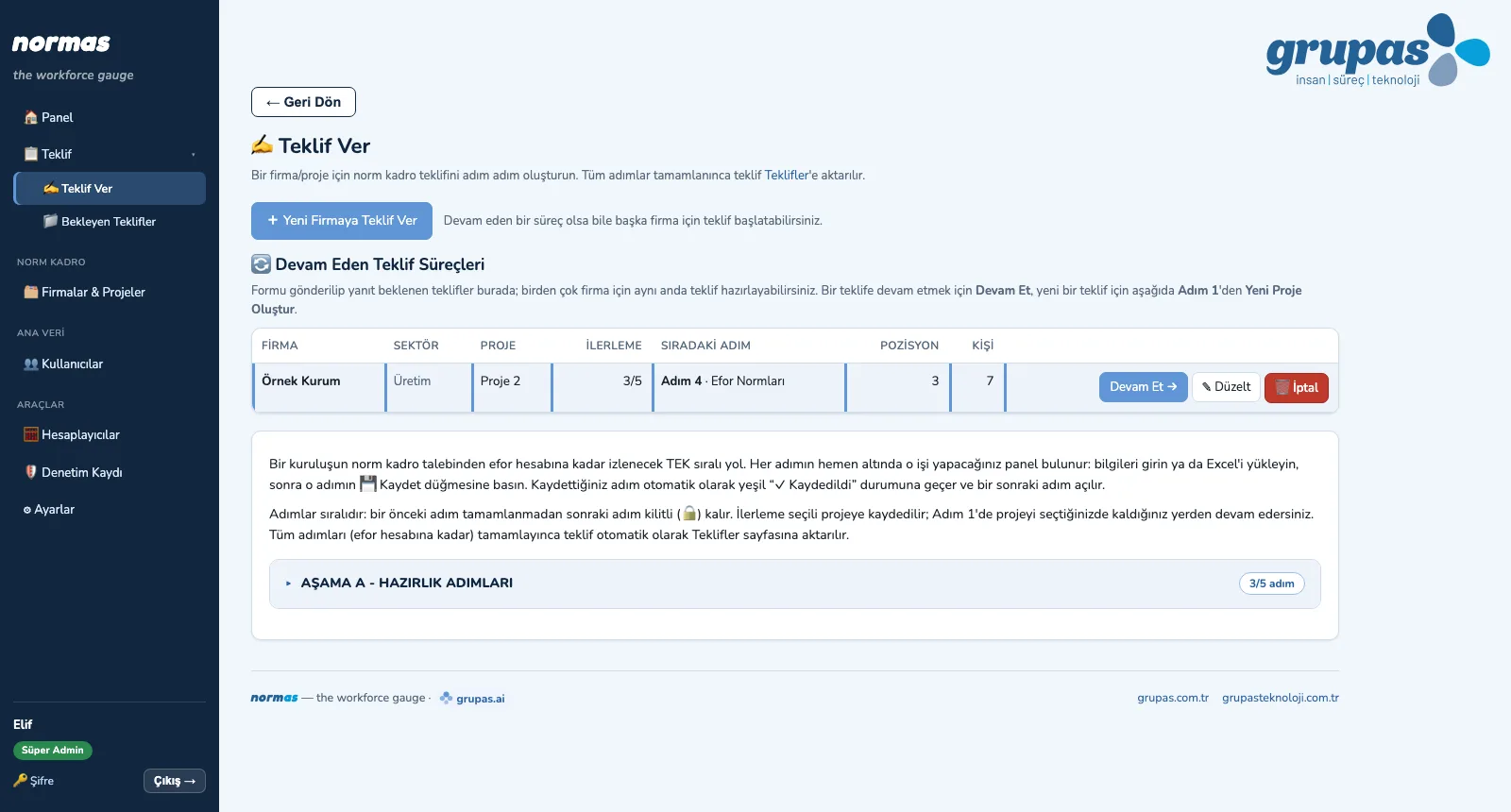
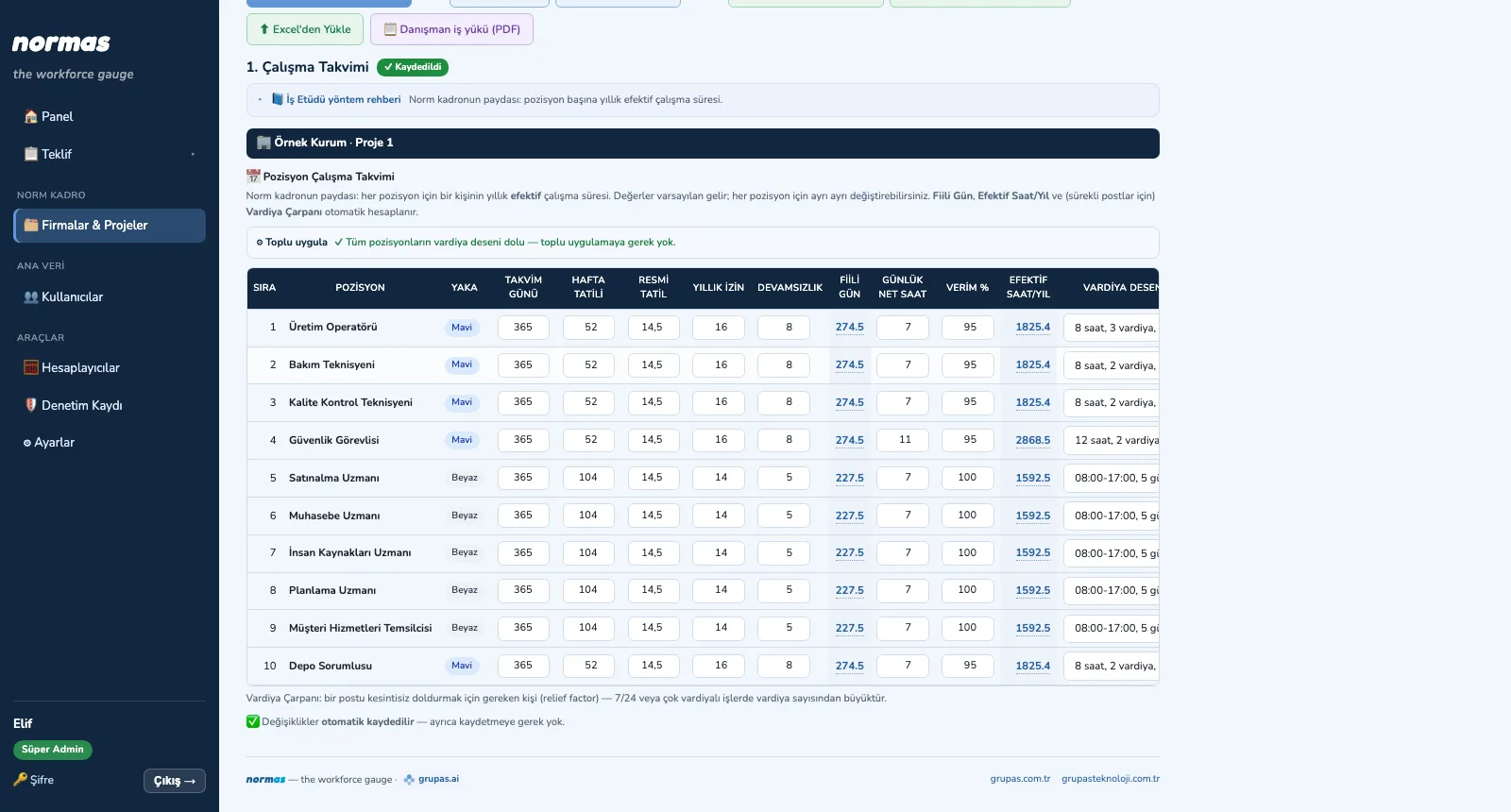
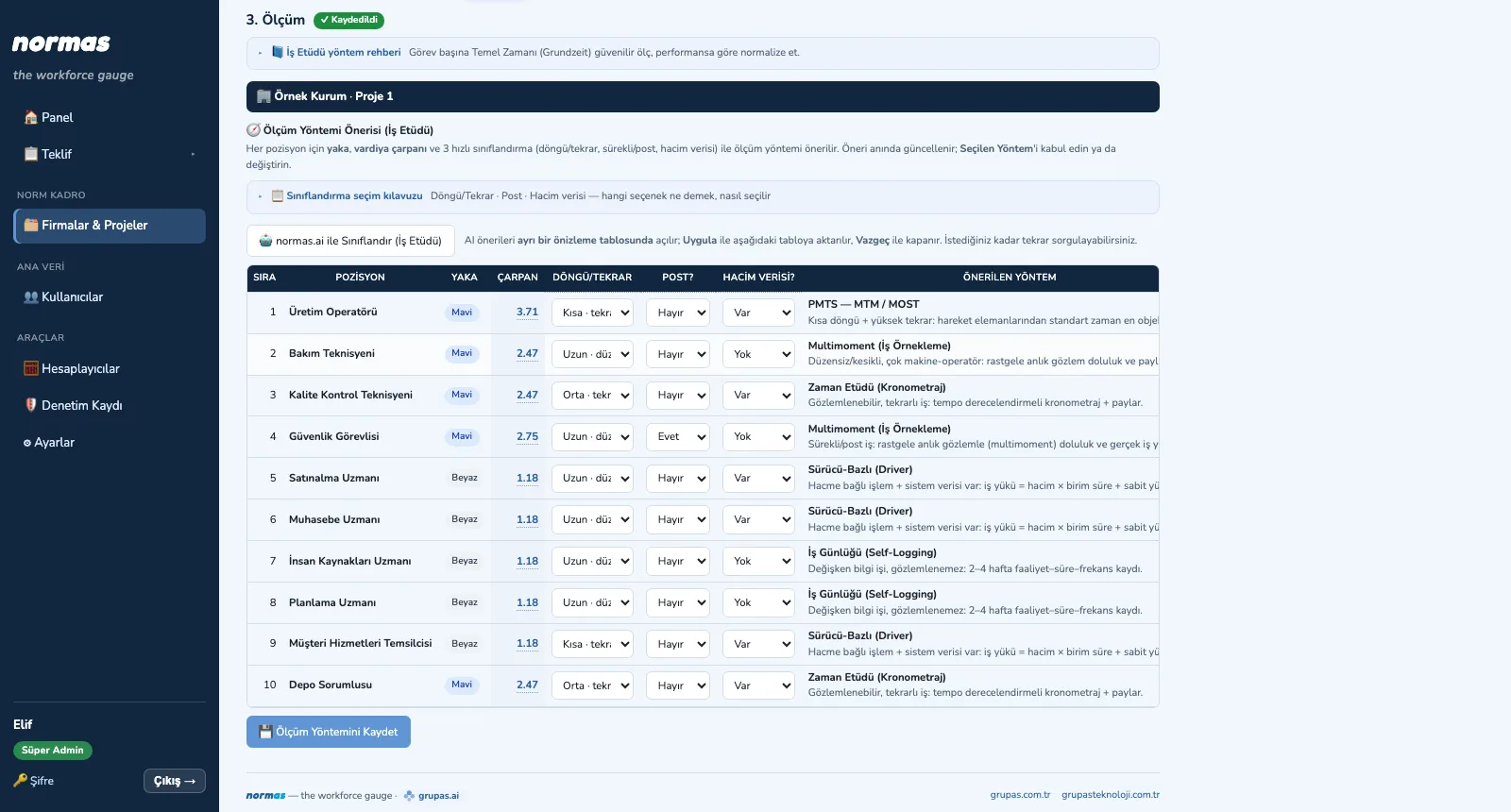
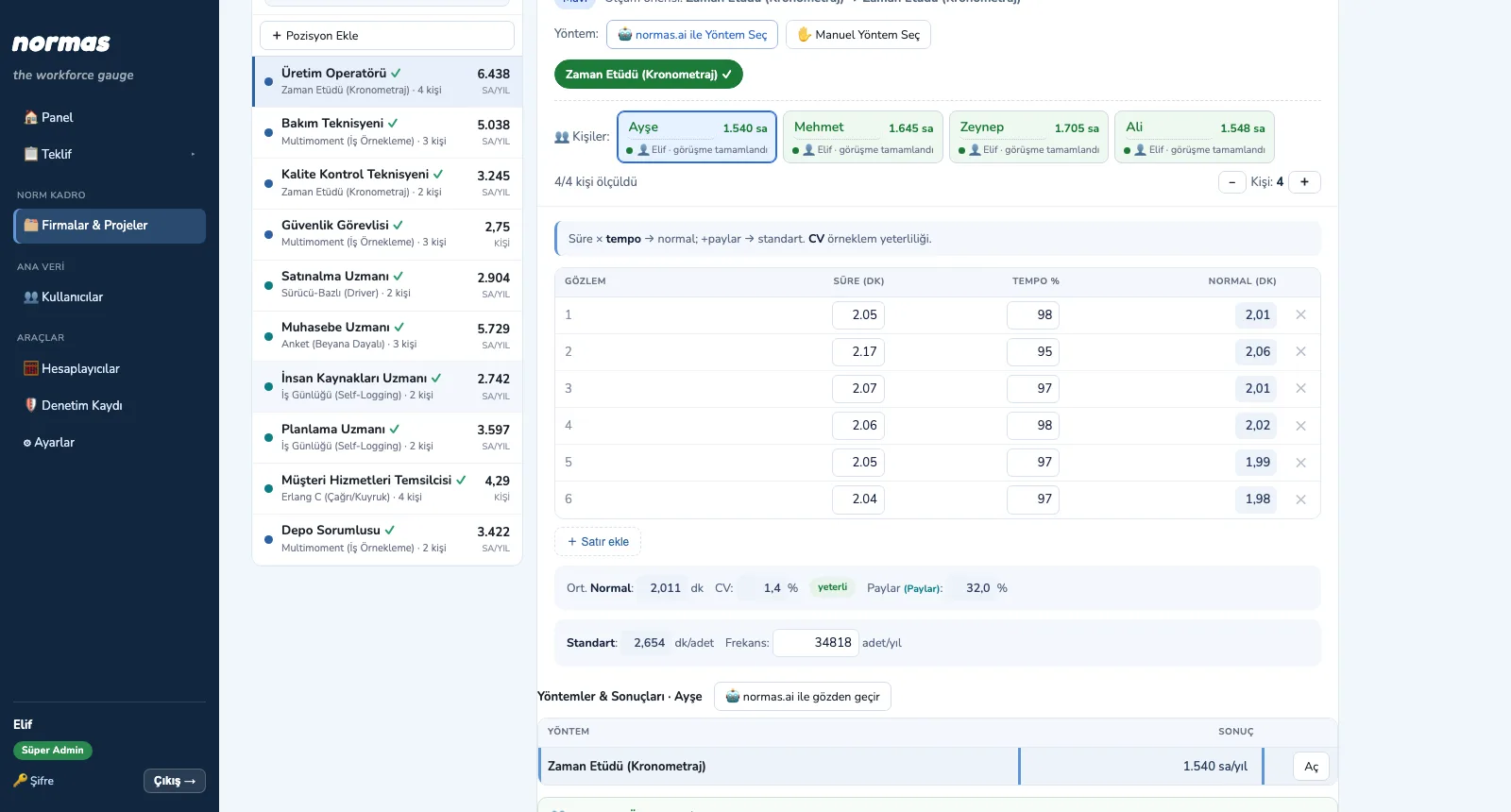
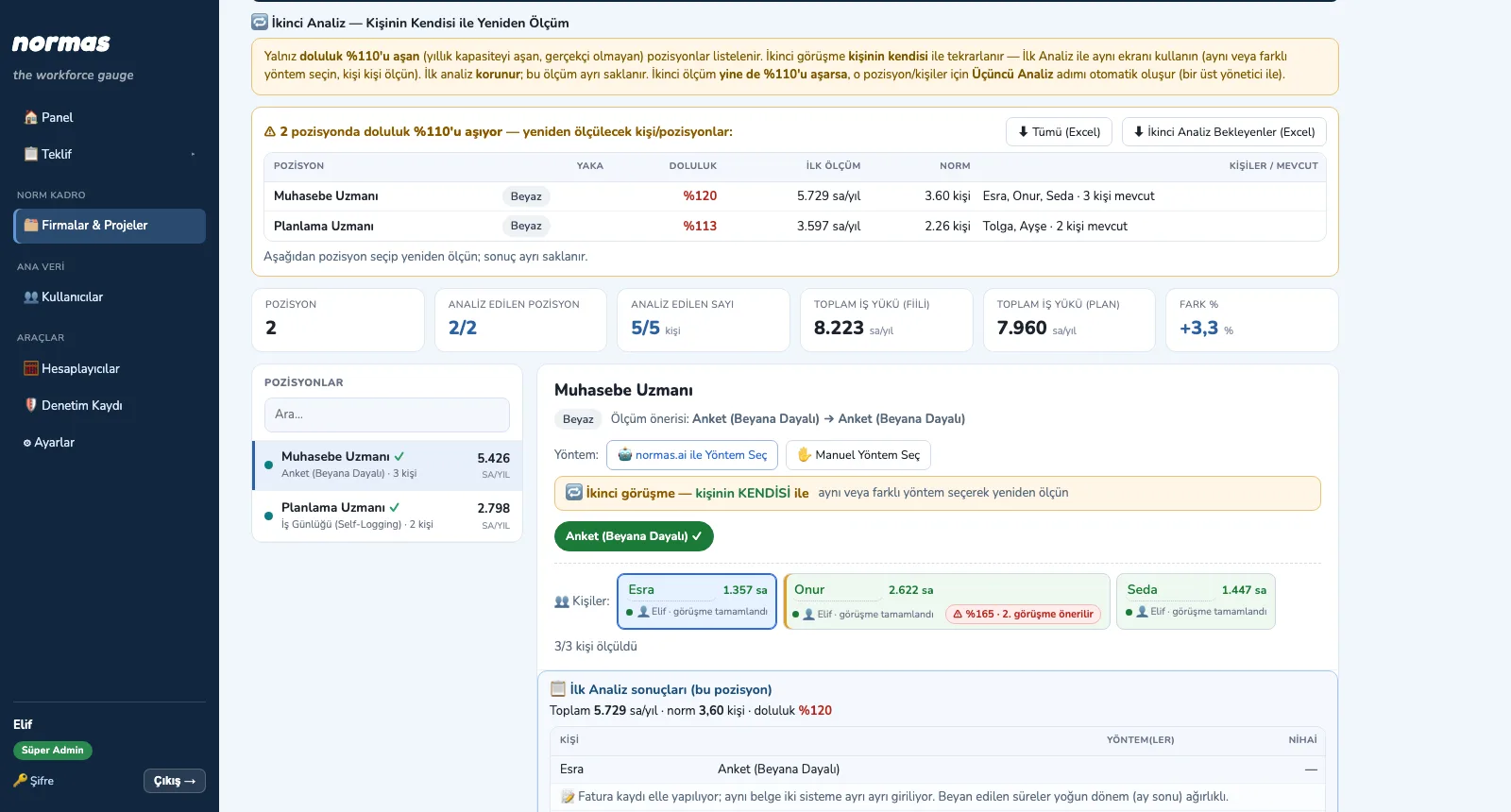
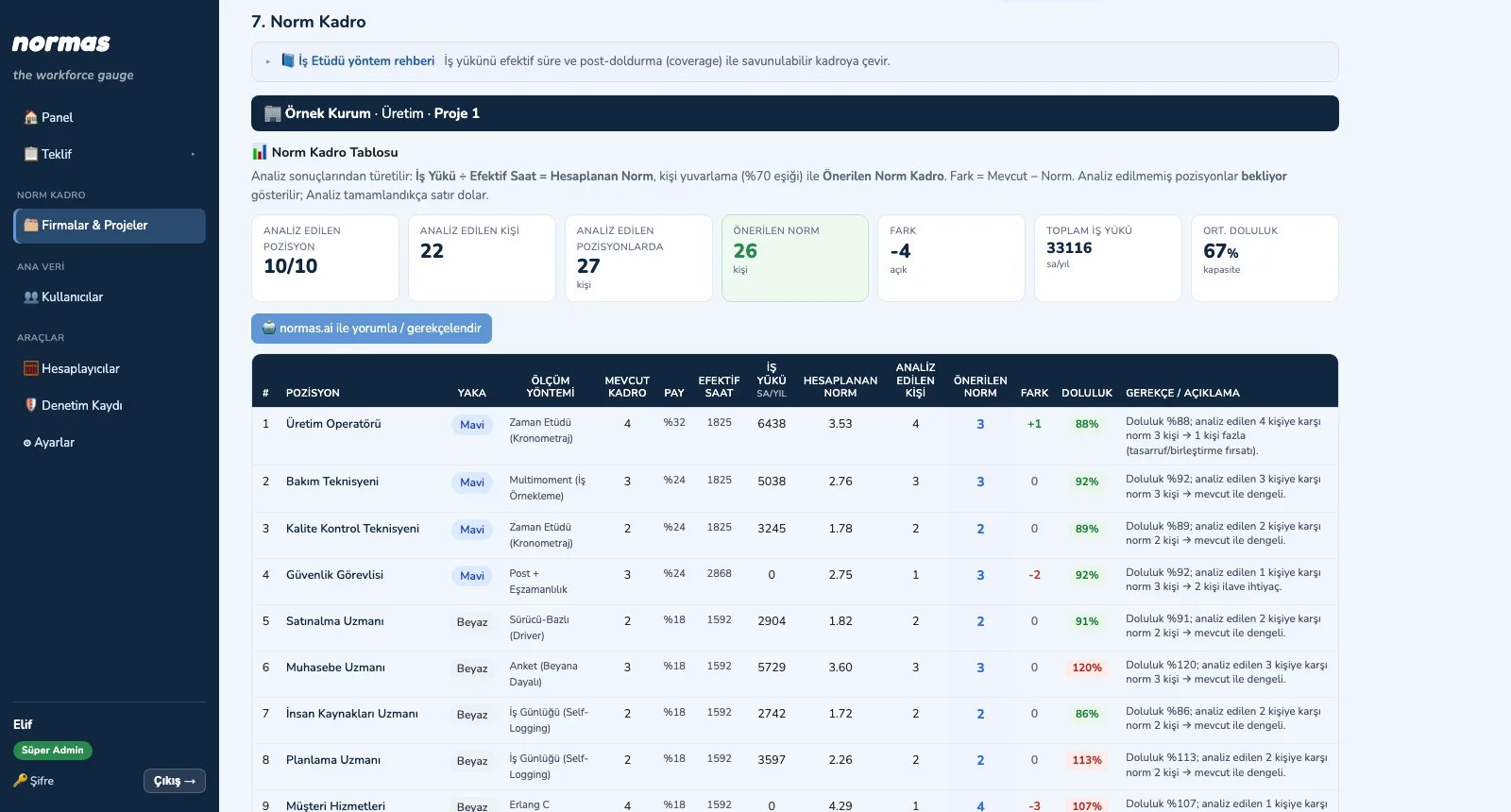
Screens are shown with sample data only; the application interface is in Turkish.
What it brings to your staffing decision
The right method for the work
A primary and an alternative method are suggested from nine methods, based on collar, cycle, post and volume data, with a rationale.
Real capacity
Annual effective hours from each position's working calendar and shift pattern; the shift factor for continuous posts.
Workload person by person
Each person in a position is measured separately; workload, norm and utilization show per person and in total.
Rounds that catch overload
Declarations above 110% of gross capacity are listed; the Second Analysis is with the person, the Third with a line manager.
A transparent norm table
Workload ÷ effective hours, person rounding, difference, utilization and rationale; the difference becomes savings with collar-based cost.
AI assistance
Allowance and method suggestions, analysis review, job description consistency check, interpretation and management reports; the final decision stays with the consultant.
Share-ready outputs
The norm report and effort table as PDF, analysis detail as Word, overload lists as Excel and the final report as PowerPoint.
Built on consulting experience
NORMAS was built on Grupas's norm staffing and workforce analysis consulting experience; every phase has a work study method guide, and it runs in the browser with nothing to install.
For any organization whose work can be measured
Manufacturing and industry
Shift-based lines, maintenance, quality, warehouse and logistics, plus the administrative staff behind them — blue and white collar together.
Services, public sector and healthcare
24/7 posts, call and service desks, application and file work; Erlang C for queue-based work.
HR and consulting
HR teams doing organization and headcount planning, and consulting teams running norm staffing projects.
- HR and organization managers
- Top management and finance
- Work study specialists and industrial engineers
- Consultants running norm staffing projects
One package, the license that fits you
Every feature in every license. Choose your license model and we will prepare a quote for your number of users.
Frequently asked questions
What is NORMAS?+
What is a norm staffing level and how is it calculated?+
What is the work study method?+
Which measurement methods are available?+
Why does the shift factor matter?+
Base your staffing decision on measurement with NORMAS
Write to us for a live walkthrough on sample data.